Before the Knowledge Walks Out: A Systematic Approach to Capturing What Your Team Actually Learned During a Consulting Engagement
The Deliverable Is Not the Learning
At the conclusion of most consulting engagements, the client organization receives a final report. Sometimes it arrives as a polished slide deck. Occasionally it includes a detailed implementation roadmap or a set of documented process recommendations. These materials are the formal output of the engagement—the artifact that justifies the invoice and gets filed in the shared drive.
They are also, in most cases, a pale representation of what actually happened during the engagement.
The real learning in a consulting engagement is distributed, informal, and largely invisible. It lives in the judgment calls your project team made when the consultant's framework didn't quite fit the situation. It exists in the analytical habits your finance manager developed while working alongside the engagement team for three months. It shows up in the process workaround your operations supervisor invented during implementation that worked better than the recommended approach. None of this appears in the final report. All of it has significant organizational value—if it can be captured before it evaporates.
The evaporation is not hypothetical. Research on organizational learning consistently finds that tacit knowledge—the kind that lives in people's heads rather than in documentation—has a half-life measured in months, not years. When the engagement concludes and the team disperses back to their regular roles, the accumulated insight disperses with them. Within six months, much of what was learned is functionally inaccessible.
Understanding the Three Layers of Engagement Learning
A useful starting point for any post-engagement knowledge recovery effort is recognizing that organizational learning from consulting engagements occurs at three distinct levels, each of which requires a different capture approach.
The analytical layer encompasses the frameworks, models, and problem-solving approaches that the team encountered during the engagement. Some of these were brought by the consulting firm; others were developed collaboratively. This is the most visible layer of learning and the one most likely to be partially documented in deliverables. It is also the layer that is most likely to be discarded when it is perceived as belonging to the consultants rather than to the organization.
The process layer captures the operational improvements, workflow modifications, and procedural changes that emerged during implementation. These are often discovered rather than designed—they surface when a recommended approach meets actual operational conditions and has to be adapted. This layer is rarely documented by the consulting team, because it emerges after the diagnostic and recommendation phases are complete and is often treated as an execution detail rather than a knowledge asset.
The relational layer encompasses what the team learned about the organization itself: which stakeholders are effective at driving change, where informal authority actually resides, which communication approaches work under pressure, and which cross-functional relationships proved more productive than the org chart would suggest. This is the most valuable and the most perishable layer of engagement learning.
A Practical Recovery Protocol
Capturing learning across all three layers requires a structured process that begins before the engagement concludes, not after. Organizations that wait until the final invoice is paid to think about knowledge retention are already behind.
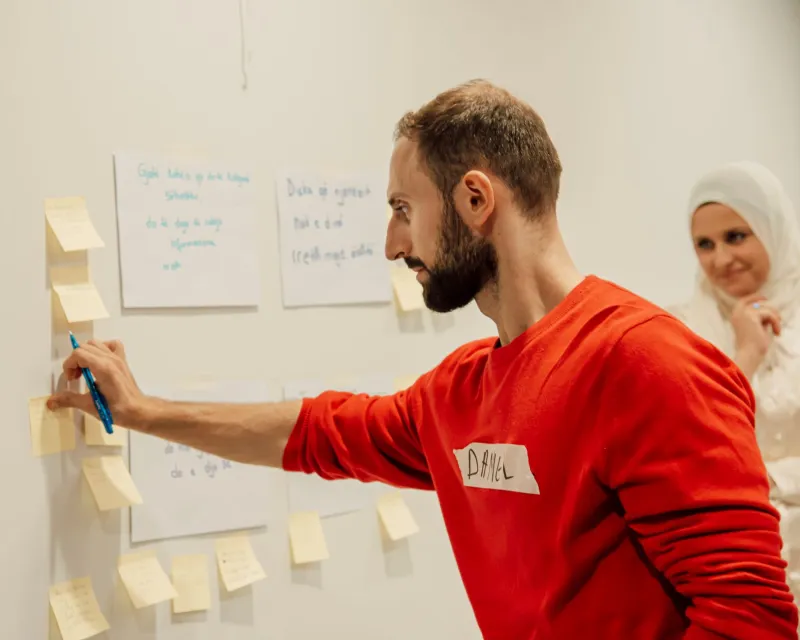
Structured debrief sessions with engagement participants. Within two weeks of the engagement's conclusion—ideally before the consulting team has fully departed—convene the internal staff who were most directly involved in the work. The agenda should focus not on what the consultants recommended, but on what the internal team learned: what surprised them, what they would do differently, what approaches they found themselves adapting, and what they wish they had known at the outset. These sessions should be documented and the documentation should be reviewed by a senior leader who was not embedded in the engagement.
Process archaeology in the field. Identify the specific points in the implementation where the recommended approach was modified to fit operational reality. These modification points are knowledge-rich. The people who made those adjustments understand something important about how the organization actually functions, and that understanding should be extracted and documented while it is still fresh. A structured interview protocol—focused on what changed, why it changed, and what the result was—is more effective than an open-ended request for feedback.
Analytical toolkit documentation. Any frameworks, models, or analytical approaches that proved useful during the engagement should be translated from consulting-firm language into organizational language and stored in a format that is accessible to staff who were not part of the engagement. The goal is not to replicate the consulting firm's proprietary methodology—it is to preserve the problem-solving habits that the team developed while using it.
A relational map of what worked. Ask engagement participants to document the internal relationships and communication channels that proved most effective during the project. Who needed to be involved in which decisions? Whose informal approval accelerated implementation? Which cross-functional connections generated the most productive problem-solving? This information is extraordinarily valuable for future initiatives and is almost never captured in formal deliverables.
Making Retention a Leadership Priority
The most significant obstacle to post-engagement knowledge retention is not methodological—it is attentional. When the engagement concludes, organizational attention shifts to the next priority. The team disperses. The project manager moves on. The institutional momentum that sustained the work dissipates, and with it goes the urgency of capturing what was learned.
Countering this requires explicit leadership commitment to the retention process. A senior executive should be designated as accountable for the knowledge recovery effort, with a defined timeline and specific deliverables. The process should be treated as a discrete project, not an administrative afterthought.
Organizations that invest in this discipline consistently report that the compounding value of captured engagement learning exceeds the value of the formal deliverables over a three-to-five-year horizon. The final report describes what the consultants found and recommended. The recovered learning describes what the organization discovered about itself—and that is the knowledge that builds genuine internal capability.
The consulting firm has already been paid. The question now is whether the organization extracts full value from what the engagement generated. That extraction does not happen automatically. It requires the same deliberate effort that any other strategic priority demands—and it has a closing window that leadership should take seriously.